
- News
- Business News
- India Business News
- Fuel excise cut will widen fiscal deficit, Moody’s says
Trending
This story is from October 9, 2018
Fuel excise cut will widen fiscal deficit, Moody’s says
The cut in excise duty on petroleum products will increase fiscal deficit, a credit negative, Moody’s Investors Service has said.
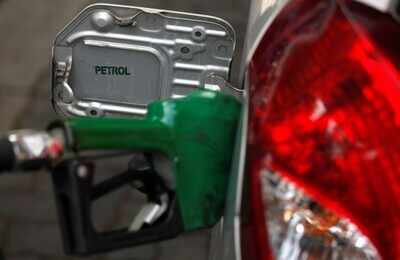
COIMBATORE: COIMBATORE: The cut in excise duty on petroleum products will widen fiscal deficit, a credit negative, Moody’s Investors Service has said.
The Government of India (Baa2 stable) effected a reduction in the central excise duty on petrol and diesel of Rs 1.5 per litre and asked public sector oil marketing companies to absorb an additional Re 1 per litre reduction in petrol and diesel prices on October 5.
“Overall, excise duty cuts are credit negative because they will reduce government revenue collection and increase India's fiscal deficit,” the agency said.
“The excise cuts will reduce government revenue by Rs 10,500 crore (about $1.4 billion) or 0.05% of GDP (gross domestic product) for the remainder of fiscal 2018, which ends in March 2019,” it said.
“Consequently, we expect the central government deficit target to slip modestly to 3.4% of GDP, while the combined general government deficit (central and state) should remain at about 6.3% of GDP,” it said.
The government’s revenues from excise duties on petroleum products have more than doubled since fiscal 2014. Unlike the central government, state governments charge VAT (value added tax) on fuel (which is outside of the central Goods and Services Tax net) as a percentage of prices and have therefore benefited from rising oil prices.
“We expect the stimulus of fuel excise cuts to have a limited effect on GDP growth. Although lower excise taxes will help offset some of the negative effect on household consumption from higher oil prices, a depreciating rupee and potential curtailment of government spending will likely mute the benefits,” Moody’s said.
“We continue to expect real GDP growth of about 7.3% in fiscal 2018 and 7.5% in fiscal 2019. However, intensifying external headwinds (tightening global financial conditions, high oil prices and trade tensions) and tightening domestic credit conditions present downside risks to our forecasts,” the agency said.
The Government of India (Baa2 stable) effected a reduction in the central excise duty on petrol and diesel of Rs 1.5 per litre and asked public sector oil marketing companies to absorb an additional Re 1 per litre reduction in petrol and diesel prices on October 5.
“Overall, excise duty cuts are credit negative because they will reduce government revenue collection and increase India's fiscal deficit,” the agency said.
“The excise cuts will reduce government revenue by Rs 10,500 crore (about $1.4 billion) or 0.05% of GDP (gross domestic product) for the remainder of fiscal 2018, which ends in March 2019,” it said.
“These measures create material downside risks to the central government’s fiscal deficit target of 3.3% of GDP for fiscal 2018. Because the government had already met 94.7% of the budgeted annual deficit by August 2018, to achieve its deficit target it will likely need to compress capital expenditure,” Moody’s stated.
“Consequently, we expect the central government deficit target to slip modestly to 3.4% of GDP, while the combined general government deficit (central and state) should remain at about 6.3% of GDP,” it said.
The government’s revenues from excise duties on petroleum products have more than doubled since fiscal 2014. Unlike the central government, state governments charge VAT (value added tax) on fuel (which is outside of the central Goods and Services Tax net) as a percentage of prices and have therefore benefited from rising oil prices.
“We expect the stimulus of fuel excise cuts to have a limited effect on GDP growth. Although lower excise taxes will help offset some of the negative effect on household consumption from higher oil prices, a depreciating rupee and potential curtailment of government spending will likely mute the benefits,” Moody’s said.
“We continue to expect real GDP growth of about 7.3% in fiscal 2018 and 7.5% in fiscal 2019. However, intensifying external headwinds (tightening global financial conditions, high oil prices and trade tensions) and tightening domestic credit conditions present downside risks to our forecasts,” the agency said.

About the Author
M AllirajanEnd of Article
FOLLOW US ON SOCIAL MEDIA










Hot Picks
TOP TRENDING
Trending Stories
In Business
Entire Website
- Will banks open only for 5 days a week? Here’s what you should know about IBA’s proposal
- India set to be third largest economy, says S&P Global
- Dalal Street bull run continues! BSE Sensex crosses 69,000 for the first time; Nifty above 20,800
- Byju’s reduces notice period for employees as troubles mount
- Sensex surges over 900 points, Nifty above 20,550 as BJP state election wins bolster Modi's Lok Sabha 2024 prospects
- UltraTech to buy building materials business of Kesoram in 7,600 crore deal
- Tata Technologies stock debuts at a bumper 140% premium; share price at Rs 1200 on BSE
- Tata Technologies share allotment: How to check IPO allotment status, listing date, GMP
- BSE m-cap rides rally in Adani stocks, tops $4 trillion
- Charlie Munger, who helped Warren Buffett build Berkshire, dies at 99
- Second assassination attempt on Trump triggers outrage, suspicion on all sides
- Kolkata police commissioner removed after CM Mamata Banerjee's meeting with docs
- Rs 15cr gold crown from the Ambanis: Meet Mumbai’s richest Ganeshas
- BAPS swaminarayan temple vandalised in New York; 'unacceptable', says Indian consulate
- Modi govt will bury bid to revive 90s-like terrorism in J&K: Amit Shah
- 'Look at own record': India condemns remarks by Iran's Supreme Leader Khamenei
- Will Kejriwal pass the agni pariksha like Indira did in 1971?
- Apple's biggest 'iPhone update' for year 2024 rollout starts today
- Attempt to derail Delhi bound Swatantrata Senani Express
- UPS vs NPS Calculator: Switch a no-brainer? Not really! Check top points



Popular Categories
Hot on the Web
Top Trends
Prince HarryWho is Ryan RouthUPI Transaction LimitArvind Kejriwal ResignationNEET UG Admission CriteriaKolkata Doctor Rape CaseUS Presidential ElectionsRohit SharmaSports Stars Turned Power CouplesIBPS RRB Clark PO ResultDonald TrumpCristiano RonaldoIndia vs Korea HighlightsBMW Accident Madhya PradeshUPS vs NPS CalculatorMiami Dolphins OwnerLive Cricket Score
Trending Topics
Living and entertainment
Latest News
Govt launches programme to tackle glacial lake outburst flood threat in Himalayas, all 190 high-risk lakes to be monitoredKhatron Ke Khiladi 14: Shalin Bhanot hosts a fun party for his co-contestants Krishna Shroff, Abhishek Kumar, KaranVeer Mehra and othersAstrological Influence on Zodiac Signs' Career ChoicesBike rally held to raise voter awareness in Jammu and Kashmir's Doda ahead of assembly electionsFalcons' Predictable Offense and Cousins' Prime-Time Woes Spell Trouble in PhiladelphiaTaurus, Daily Horoscope Today, September 17, 2024: Anxiety and stress diminishLiza Colon becomes 1st Latina to win Best Supporting Emmy Award'Oh no!': Hilarious goof-up leads to missed catch, leaves bowler in smile. WatchTop NFL Superstars Who Are Vegan: Derrick Morgan, David Carter, Theo Riddick and moreKSCA Invitational: Arjun Tendulkar takes match haul of 9 wickets in big Goa CA XI winSohum Shah says 'Tumbbad 2' will be different from 'Munjya' and 'Stree 2': 'They are not making dadi-nani ki kahaniyaan'1031 candidates to contest Haryana Assembly Elections to be held on October 5: CEO J AgarwalSathiyan set to partner Sreeja in mixed doublesHere's why multiple WWE Hall of Famers refused to team up with Kevin Owens on SmackDownCarlito's Net Worth 2024, Current WWE Salary and MoreDirector Shailesh Patel and Atul Soni start shooting for an untitled project with Muhurat pujaEid Milad Un Nabi 2024: Date, Rituals and Significance of Eid e MiladBlasters weren’t good enough in those key moments, says coach
Copyright © 2024 Bennett, Coleman & Co. Ltd. All rights reserved. For reprint rights: Times Syndication Service